Skip to content

The majority of business deals don’t crumble because buyers aren’t interested. Actually, they fail because buyers have no idea how to fund the purchase. If you’re also one of those business buyers who don’t know how to get a loan to buy a business, don’t worry, Yaw Capital is there for you.
Buying an existing business is quite different than launching a startup. Lenders judge these deals based on numbers, not facts. In this article, we will share simple steps on who can qualify, what lenders expect, how the approval process works, and more to get a business loan.
Can You Get a Loan to Buy a Business?
Yes, you can. Every year, thousands of business buyers use loans to take over an operating business instead of paying the full amount upfront. Lenders are usually more comfortable funding established businesses because they have real results, not just plans.
That’s why businesses with stable operations, expected income, and proven net profit qualify more for this financing. However, financing is difficult when the revenue of the business is low, documents are incomplete, or profits only exist “on paper.” In such cases, lenders may reduce the loan amount or simply decline the request.
Step-by-Step: How to Get a Loan to Buy a Business
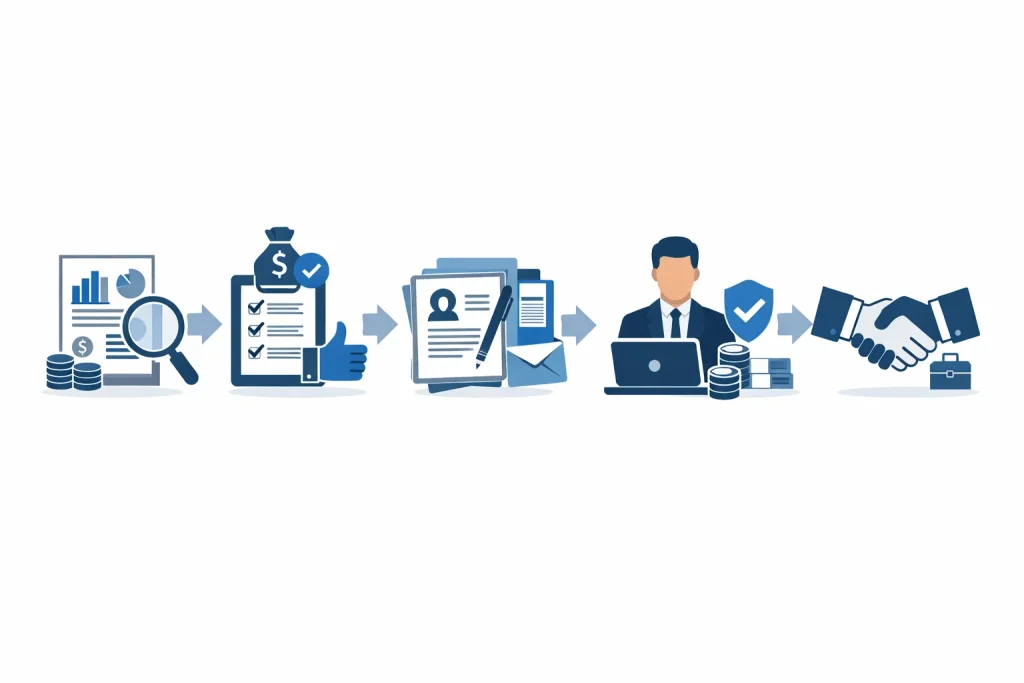
Many people think that by filling out forms, they can get a loan to buy a business. Well, it’s not anything like that. It is a step-by-step process, where each step matters. One wrong step can turn the lender’s yes into no. The following steps are:
Step 1: Find the Right Business
First, you have to find a business that has a tangible income. Lenders prefer companies that have at least 3 years of tax returns and handsome profits. Also, the purchase price should be reasonable based on earnings. You can calculate it using profit multiples. If the price is too high compared to cash flow, lenders may reject the deal. You should have detailed profit and loss statements and balance sheets to build trust.
Step 2: Review Financial Documents
Lenders carefully review financial documents. Their target is stable numbers, not sudden jumps or drops in income. If your business has low revenue, unpaid bills, or relies on just a number of customers, you are not eligible for a business loan.
Step 3: Understand How Much You Can Borrow
Your loan amount depends on the purchase price and the business’s potential to repay debt. Most of the time, lenders will ask buyers to give 10% to 30% of the total cost as a down payment. They also calculate cash flow coverage. If the business already has loans and income is not sufficient to cover another loan, approval becomes difficult.
Step 4: Choose the Right Loan Type
There are various types of financing to buy a business. SBA-backed loans are popular because they have a lower down payment and longer repayment terms, but there is a lot of paperwork involved, and they often take a long time for approval. Traditional bank loans are suitable for successful businesses and experienced buyers, but they require more cash upfront. Alternative or private lenders can approve way faster than anyone but have high interest rates. Last but not least, buyers go for seller financing. In this, the seller funds part of the price.
Step 5: Get Prequalified
Prequalification gives you a crystal clear idea of how much you can borrow before you shake hands with the seller. Lenders review your credit score, liquidity, and industry experience to estimate your loan amount. This step is important before you sign any purchase agreements with the seller, as it helps you negotiate and avoid deals that are out of range or not worthy. It also shows sellers that you are a serious buyer.
Step 6: Submit Application and Close
Once a deal is under contract, the lender starts the underwriting process. This includes the reviews of business finances, legal documents, lease agreements and liabilities. They also review your personal finances. This step can take some time, especially with SBA loans. After final approval, funds are released, you can give them to the seller and the business is transferred to your name.
Common Mistakes Buyers Make When Getting a Loan

Did you know that some silly mistakes can reject business loans? Yes, it is true. The first one is that some buyers wait until the agreement signing to look for finance. Without pre-approval, buyers agree to a price they cannot fund, which weakens their position and can even kill the deal. The second one is working with lenders who don’t have any experience with business acquisitions. Not every lender knows how to evaluate cash flow and goodwill or structure the deal.
The third one is that buyers ignore paperwork. Missing tax returns, questionable financials, or incomplete personal documents can get your loan request declined. The fourth is paying above market value. If the business price is higher than what the business can return, lenders see it as a risk. Experienced buyers avoid these traps by planning in advance.
How Long Does It Take to Get a Loan to Buy a Business?
The time it takes to get a business acquisition loan can be different in different cases. It all depends on the type of lender and the state of your deal. In general, it can take a couple of days to several months. SBA loans take the longest, around 60 to 90 days, because of lengthy paperwork and detailed business valuations. Traditional bank loans often close in 2 to 6 weeks if the business is good and the documents are complete. Further, alternative or online lenders can finance in 24 to 72 hours after approval. In urgent cases, some buyers use short-term bridge loans to close fast.
How Yaw Capital Helps Buyers Secure Financing
Finding the right business is only half the battle. The real game begins when you have to fund your deal. As a financing intermediary and advisory firm, Yaw Capital helps businesses and investors in getting a loan to buy a business. We can support acquisitions from $250,000 to $250 million. Here’s how Yaw Capital supports buyers:
- Prequalification Before Commitment: Buyers are screened for credit, available cash, experience, and deal size. Meanwhile, the business’s cash flow and EBITDA are also reviewed. Buyers receive a pre-qualification letter within days.
- Connect Buyers With the Right Lenders: Instead of random bank applications, Yaw Capital matches buyers with SBA lenders, banks, or private credit funds that suit the industry, risk level, and deal size.
- Structure Deals for Lender Approval: Deals are structured using the right combination of SBA loans, buyer equity, and seller notes.
- Fewer Chances of Rejections: We check DSCR, collateral, and financial risks beforehand. This differentiates all red flags early and reduces delays and last-minute surprises.
To Wrap Up
Overall, the process of getting a business loan is very simple and achievable if you follow the right process and choose the right lender. Buyers should first check their personal financial situation and then target businesses with good cash flow and transparent records. Yaw Capital helps buyers as a broker and connects them with qualified lenders and structures loans from prequalification to closing. Whether you’re buying a service firm or any other operating business, you can contact us anytime.
FAQs
1. What is the easiest way to get a loan to buy a business?
Ans: The easiest way to get a loan to buy a business is to choose a profitable business and apply through a reliable lender. This works best when you have a good credit score, strong financial records, all documents in place, and a clear business plan.
2. How much credit score do I need to buy a business?
Ans: You usually need a credit score of 700+ (CIBIL) or 750+ (FICO-based) to buy a business and get good loan terms. Scores between 650 and 700 may still qualify, but often with higher interest rates or limited loan options. If your score is below 650, getting financing becomes very difficult.
3. Can first-time buyers get a loan to buy a business?
Ans: Yes, first-time buyers can get a loan to buy a business. Many lenders and government programs like SBA 7(a) loans (US) support new entrepreneurs who want to purchase an existing business. You’ll need a strong business plan, good personal credit, and usually a down payment of about 10–25%.
4. Do I need collateral to get a business acquisition loan?
Ans: Yes, in many cases, you may need collateral to get a business acquisition loan, but some lenders also offer collateral-free options. Traditional lenders often ask for security like property or equipment, especially for large loan amounts or newer businesses.
5. Can I use an SBA loan to buy an existing business?
Ans: Yes, you can use an SBA loan to buy an existing business. It is often considered safer than starting from scratch because the business already has customers, staff, and working operations. SBA loans also offer lower interest rates and better terms, and they can cover the purchase cost and working capital.