Skip to content

Finding the right business to buy is only half the battle, but financing these deals is a grave problem. Therefore, buyers are obliged to apply for SBA 7(a) loans for business acquisition. An SBA 7(a) loan is the most popular type of business loan in the U.S. It is a government-backed loan program that provides loans to purchase established and profitable small businesses. In this article, you’ll learn how SBA 7(a) loans work, who is eligible for them, how much you can borrow, and the right steps to get approved.
What is an SBA 7(a) Loan?
An SBA 7(a) loan is the U.S. Small Business Administration’s loan program for small business owners and buyers. It funds deals up to $5 million. This administration does not lend money directly. It works with banks and private lenders and guarantees a large portion (75% to 85%) of the loan. This guarantee lowers the risk for the bank. It covers the purchase price, business assets, transition costs, working capital, inventory, closing costs, and rent. In standard business loans, buyers are asked for 10% equity for full ownership transfer. However, SBA loans for business acquisition support partner buyouts under specific financial conditions.
Why SBA 7(a) Loans Are Ideal for Business Acquisitions
The biggest roadblock to a business acquisition is cash, and this is the point where SBA 7(a) loans shine. The SBA 7(A) loan down payment for the majority of buyers is 10% to 20%. This feature makes an SBA 7(a) loan a far more realistic option. These loans also have long repayment terms—up to 10 years for business purchases and up to 25 years in real estate. They are accessible too. If you’re a first-time buyer or a small-business owner, you can easily get approved.
When you compare it with other options, such as SBA vs. conventional business acquisition loans, SBA loans are well-balanced. Conventional loans can be closed fast, but they require more cash and are very difficult to qualify for. Next, seller-only financing depends entirely on the seller’s willingness and liquidity. Private lenders can also get approved before the deadline, but they have high interest rates.
Eligibility Criteria for SBA 7(a) Loans
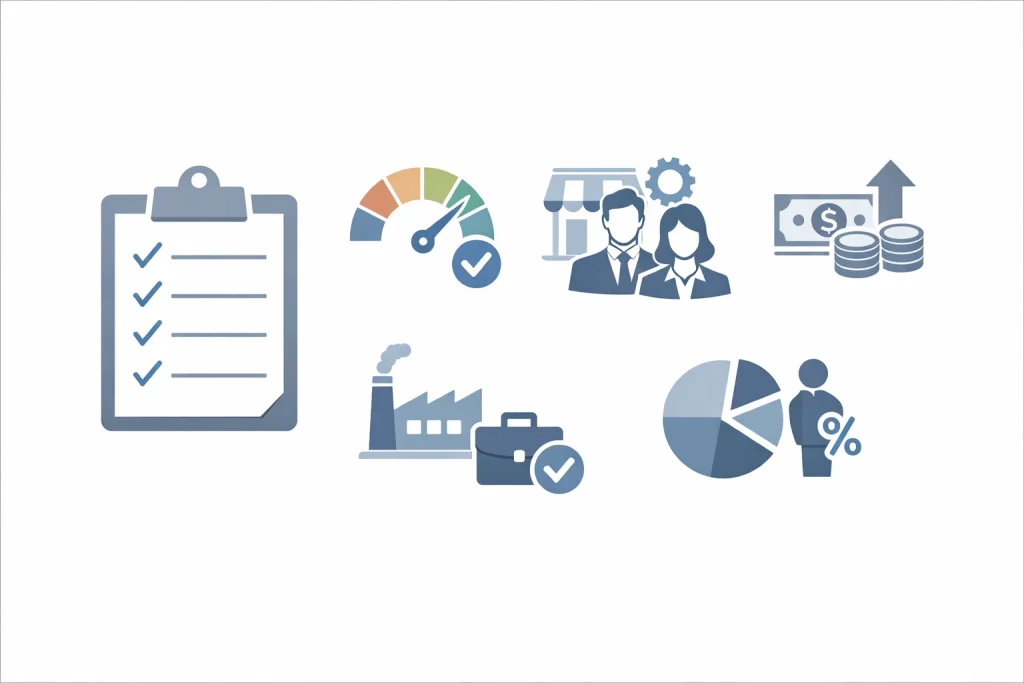
Before a lender approves an SBA 7(a) loan, it checks whether the buyer and business fulfill the SBA acquisition loan requirements. The SBA has some guidelines, and lenders do their due diligence.
Buyer Qualifications
- Credit Score: The buyers should have a good credit score, at least above 640.
- Management Experience: Buyers have to show relevant industry or leadership experience to run the business.
- Character & Background: Borrowers should have a good image, or you can say a good character, and should not be on parole.
- Down Payment: A minimum 10% equity is necessary.
- Citizenship: The applicant should be a green card holder/lawful permanent resident (LPR).
Business Qualifications
- Business Size: The business should be within SBA business size limits, which is less than $7.5M in revenue or under 500 employees.
- Cash Flow: Lenders prefer profitable businesses with a DSCR of 1.15–1.25+.
- Restricted Industries: Gambling, lending, illegal pyramid schemes, adult business and passive real estate are not eligible.
- Franchises: If it’s a franchise, then it must be listed in the SBA Franchise Directory.
Deal Structure Rules
- Loan Limit: Maximum $5 million.
- Use of Funds: Purchase price, working capital, equipment, real estate, or debt refinance.
- Ownership: The buyer should buy 100% of the business or at least 51% of it.
- Seller Financing: Only 5% of the 10% down payment is allowed from seller notes, and it must be available.
- Guarantees & Collateral: Borrowers had to give something as a personal guarantee.
Step-by-Step Process to Get an SBA 7(a) Loan for Business Acquisition
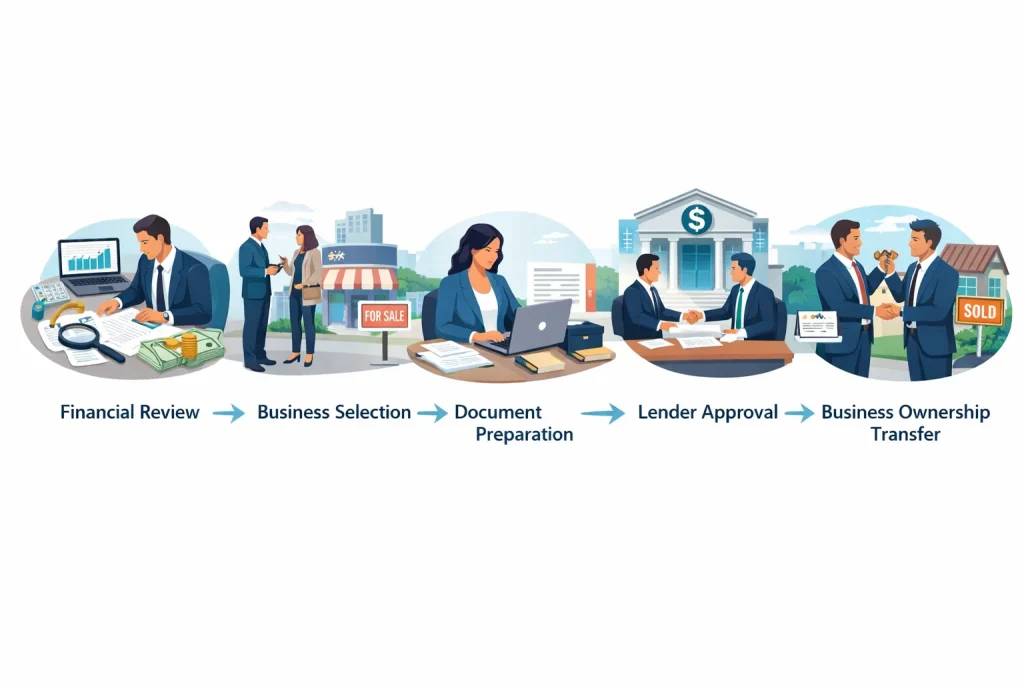
The first question in your mind is how to get an SBA 7(a) loan. It is a simple process. You just have to follow the right steps and consider all the aspects before applying for it. The following is a step-by-step SBA acquisition loan process:
Step 1: Estimate How Much You Can Borrow and Afford
At first, understand your financial situation. Review that your credit score is above 640. Be ready with at least a 10% down payment (equity injection) from your own pocket. Lenders will assess your income, debts, and assets to know how much monthly payment you can afford to pay. This step is the most important because it eliminates the businesses that are out of range.
Step 2: Search for Businesses That Meet Lender Standards
Note it down: not every business is eligible for an SBA loan. The business must be profitable, operating in the U.S., come under SBA size limits, and meet all the above-mentioned guidelines. Lenders do prefer businesses with stable profit and strong cash flow to cover loan payments. Avoid industries such as gambling or passive real estate; they have high risk and are not eligible.
Step 3: Gather Personal and Business Financial Documents
You should have personal tax returns, bank statements, a resume, and all the details of your down payment. Related to business, lenders ask for tax returns, profit-and-loss statements, balance sheets, and the purchase agreement. If your paperwork is complete and right, the SBA 7(A) loan approval time will be short, and it builds lender confidence.
Step 4: Approach SBA-Preferred Lenders and Brokers
Now, it is time to find the right lender or broker. SBA-preferred lenders understand deal structures, seller financing rules, and SBA ownership requirements. You can also approach an SBA loan broker. They will help you find the best lender for you.
Step 5: Underwriting, Valuation, and SBA Authorization
The lender reviews risk, orders a business valuation, and confirms that you’ll own 51% or 100% of the business. In case you used seller financing, the seller can give only 5% of the 10% down payment, and it must be on full standby mode for the loan term. The lender then submits the file for SBA authorization.
Step 6: Final Approval, Closing, and Transfer of Ownership
After SBA approval, documents are signed, collateral is filed, and funds are released to the buyer’s account. Then the buyer takes ownership, the seller gets paid, and the business officially becomes yours.
How Yaw Capital Helps Buyers Secure SBA 7(a) Loans
Yaw Capital is a business acquisition financing advisory firm that helps serious business buyers find the right lender and deal structure. We are not a direct lender. We are a broker that connects buyers to suitable lenders and helps them get approved for a loan at the best possible terms. Here is how Yaw Capital helps:
- Review Buyer and Deal: Our team reviews the buyer’s profile and the business carefully. This step helps avoid rejections that waste weeks or months.
- Connect Buyers with Suitable Lenders: We have a vast network of lenders and connect buyers with the right one.
- Structure Deals: We structure the deal, including the purchase terms, goodwill, seller notes, and possible earn-outs.
- Manage Documents and Speed Up Closings: SBA loans involve a lot of paperwork. Yaw Capital helps organize financial statements, projections, and lender requests to prevent any mistakes and try to close them as soon as possible.
In Summary
An SBA 7(a) loan is the best option for a business buyer to acquire a business without putting their own money at risk. It requires a lower down payment, and if it gets approved, the buyer gets long repayment terms. Still, approval depends on the buyer’s profile, business performance, and deal structure. It’s important for the buyer to know the limit and prepare all documents in advance. Before you make any offer or start doing research, first try to know where you stand. Start by getting prequalified with Yaw Capital.
FAQs
1. What is an SBA 7(a) loan for business acquisitions?
Ans: An SBA 7(a) loan is a business acquisition loan that is partly backed by the government to help buyers purchase an existing business or franchise. It can finance up to $5 million. The loan can cover the full purchase price, including equipment, inventory, goodwill, and even closing costs.
2. How much down payment is required for an SBA 7(a) acquisition loan?
Ans: In most cases, SBA 7(a) loans require at least a 10% down payment of the total cost. The down payment usually must come from the buyer’s own cash, though in some cases up to 5% can come from seller financing if the seller agrees to wait for payment during the loan term. If the loan is over $250,000, lenders do a business valuation, and the down payment is calculated on the lower of the purchase price or appraised value.
3. Who is eligible for an SBA 7(a) loan to buy a business?
Ans: The business must be for-profit, located in the U.S., and in an eligible industry with strong cash flow. Buyers should have a good credit score of above 640. Buyer have to invest their own money or equity, typically a down payment of around 10%, and the owner 20% to be eligible for an SBA 7(A) loan for buying a business.
4. How long does it take to get an SBA 7(a) loan approval for a business acquisition?
Ans: It can take about 60 to 90 days. In simple terms, expect 1–2 weeks for application, 2–4 weeks for approval, and 1–3 weeks for closing. Deals with real estate or complex finances may take longer.
5. Can first-time buyers get an SBA 7(a) loan?
Ans: Yes, first-time buyers can get financing to buy a business with SBA. Surprisingly, most people use it to buy their very first business. You just have to fulfill the requirements, find the right lender and provide all the necessary documents on time.